I have worked as an architect for more than twenty-five years. First on classical information systems in the Dutch public sector, then on data platforms and knowledge technology, and over recent years increasingly on AI. What began as a specialisation has become something every organisation now has to deal with.
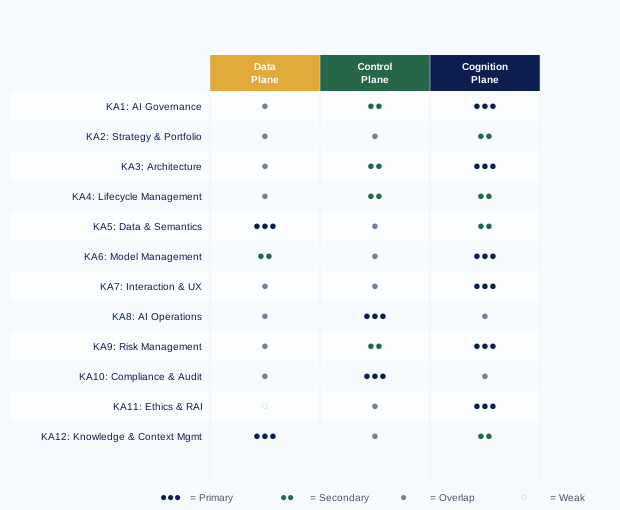
In my work I keep running into the same pattern. An organisation wants to do something with AI. Someone goes looking for a framework. ISO 42001 covers the management system, NIST writes about risk, the AI Act sets the legal boundaries, but together they do not add up to a workable whole. An AI architect who wants to understand how an agent relates to the cognition plane has to assemble the picture on their own. A risk manager looking for the expected failure modes runs into fragmented literature. That puzzling work is time-consuming and routinely goes wrong. Hence this book.
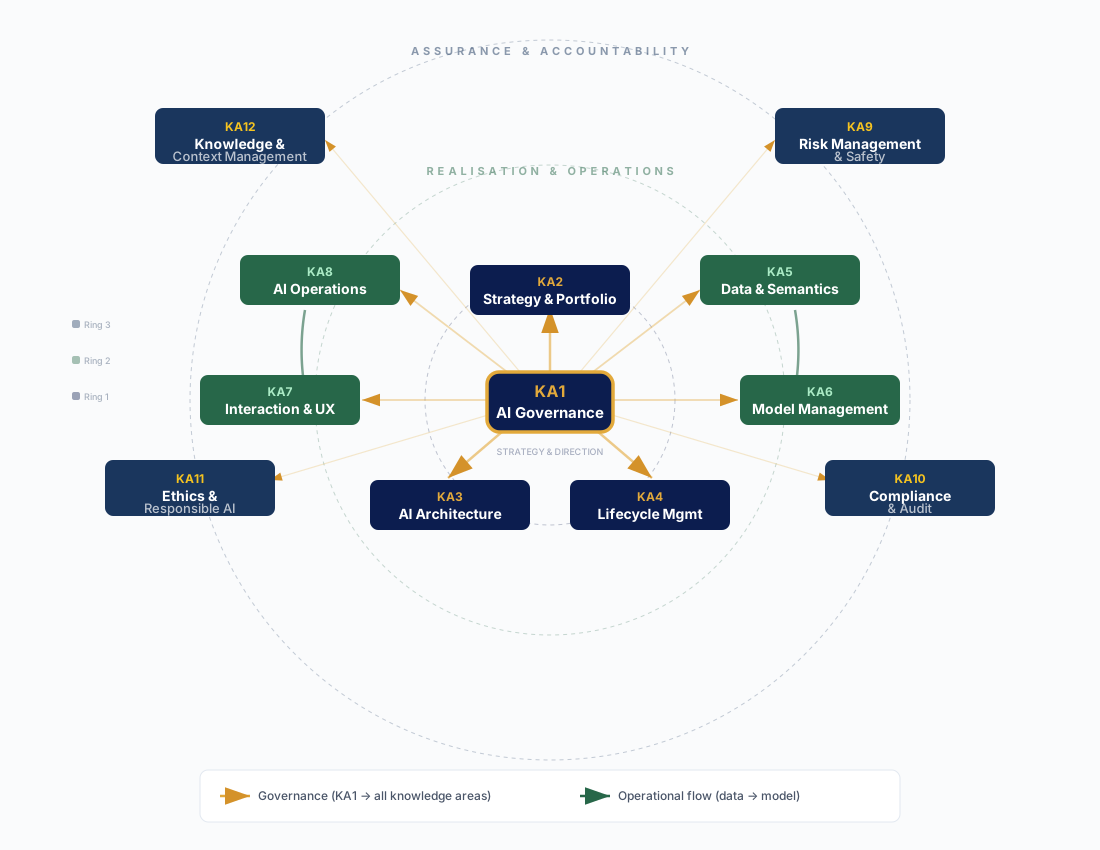
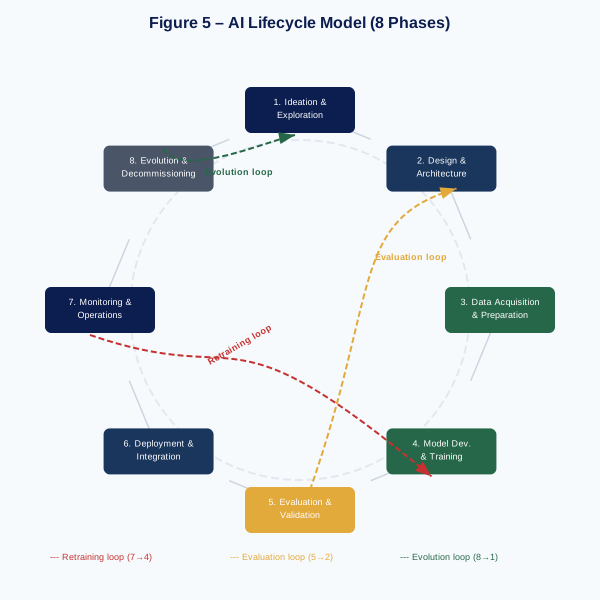
The AI Body of Knowledge brings together what existing frameworks do not provide themselves: knowledge areas, roles, a lifecycle, a metamodel, a maturity model and a reference architecture, in a coherent form. It is not an academic work, nor a catalogue of best practices. It is a working document for people who have to make progress on Monday morning.
Jan Willem van Veen
Principal Enterprise Architect, October 2026
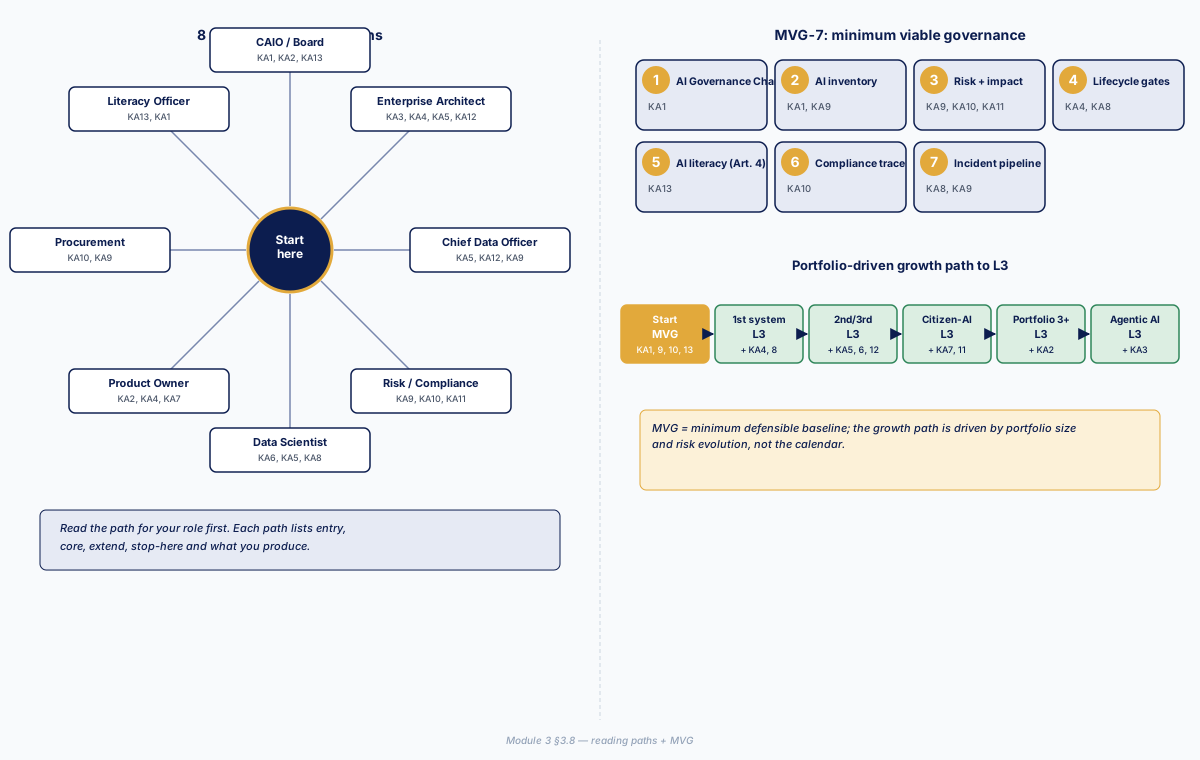
Start Here: set up AI governance in five steps
This quick start helps you establish a working AI governance within a quarter. Each of the five steps builds on the previous one and is linked to a concrete template.
-
Week 1-2: Inventory
Map which AI tools are already in use, including unauthorised ones. Use the Shadow AI Inventory template.
-
Week 3-4: Classify
Categorise all AI systems by risk according to the EU AI Act: minimal, limited, high or unacceptable.
-
Month 2: Organise
Establish the governance structure with an AI Governance Charter: who decides what, which principles apply.
-
Month 3: Register
Document each AI system with a model card. Start with the high-risk systems.
-
Quarter 2: Measure
Conduct a baseline measurement of your AI maturity using the Maturity Assessment to identify improvement areas.